The Fourth Consecutive Annual Increase
According to the Administrative Office of the U.S. Courts, total bankruptcy filings reached 574,314 in the twelve months ending December 31, 2025 — an 11 percent increase from the 517,308 cases filed in 2024.1 Non-business filings, which represent individuals and families, rose 11.2 percent to 549,577.
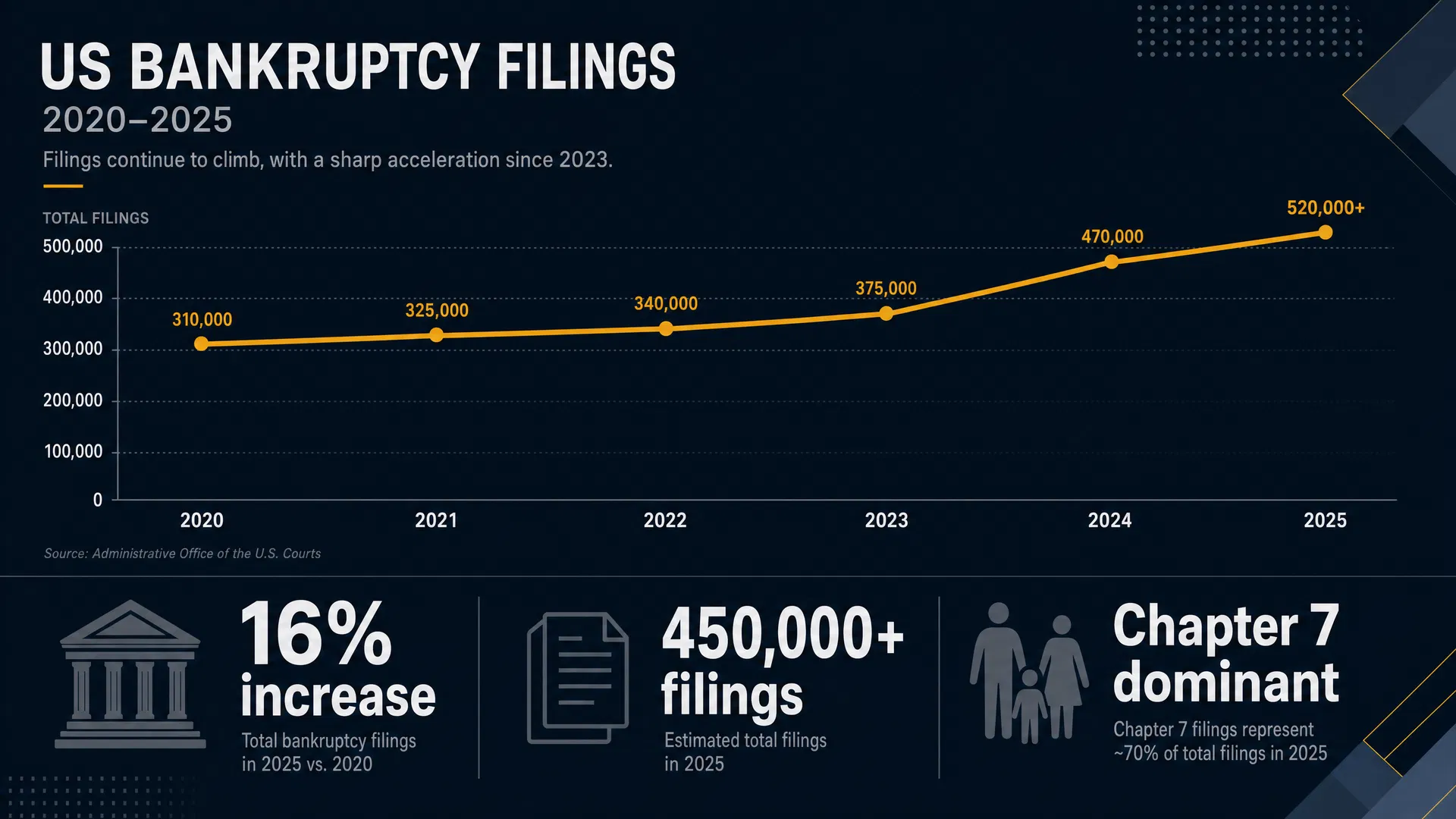
This marks the fourth straight year of rising filings after a historic low of 380,634 in June 2022, a trough created by pandemic-era stimulus payments, eviction moratoriums, and expanded unemployment benefits that temporarily suppressed financial distress. As those supports expired, filings began climbing again — and have not stopped.
Chapter 7 vs. Chapter 13: The Split
Of the 574,314 total filings in 2025, the breakdown by chapter was:
| Chapter | 2025 Filings | 2024 Filings | Change |
|---|---|---|---|
| Chapter 7 (Liquidation) | 356,724 | 310,631 | +14.8% |
| Chapter 13 (Repayment) | 207,889 | 197,244 | +5.4% |
| Chapter 11 (Reorganization) | 9,201 | 8,884 | +3.6% |
| Chapter 12 (Family Farmer) | 315 | 216 | +45.8% |
Chapter 7 — which discharges most unsecured debt within 3–6 months — remains the most common form of consumer bankruptcy, accounting for roughly 62 percent of all filings. Chapter 13, which allows debtors to keep assets while repaying debts over 3–5 years, accounted for about 36 percent.
Why Are Filings Rising?
Several macroeconomic factors have converged to push filings higher:
- Credit card debt at record levels. The Federal Reserve Bank of New York reported that total U.S. credit card balances reached $1.21 trillion in Q3 2024, with delinquency rates rising to their highest level since 2012.2
- Medical debt. A 2024 study published in the American Journal of Public Health found that 66.5 percent of personal bankruptcy filers cite medical bills as a contributing cause, and as many as 550,000 families file each year partly due to healthcare costs.3
- Elevated interest rates. The Federal Reserve's rate-hiking cycle between 2022 and 2024 significantly increased the cost of variable-rate debt, including adjustable-rate mortgages and credit cards.
- End of pandemic-era relief. Student loan repayments resumed in October 2023 after a three-year pause, adding a new monthly obligation for approximately 40 million borrowers.
Historical Context: Still Far Below the 2010 Peak
Despite four years of increases, 2025's 574,314 filings remain far below the historical peak of nearly 1.6 million filings recorded in September 2010, following the 2008 financial crisis.1 Analysts at the American Bankruptcy Institute note that filings would need to roughly triple to return to crisis-era levels.
Key takeaway for consumers: Rising filings reflect genuine financial distress across American households — not a moral failing. Bankruptcy is a legal tool designed by Congress to give individuals a structured path out of unmanageable debt. If you are struggling, you are not alone, and legal options exist.
What Should You Do If You Are Struggling?
If you are facing wage garnishment, creditor lawsuits, foreclosure, or simply cannot keep up with minimum payments, speaking with a licensed bankruptcy attorney is the most important first step. Most bankruptcy attorneys offer free initial consultations. An attorney can assess whether Chapter 7, Chapter 13, or an alternative like debt negotiation is most appropriate for your situation.
Find a bankruptcy attorney in your state →
Sources & Citations
- Administrative Office of the U.S. Courts. Bankruptcy Filings Rise 11 Percent. February 4, 2026. uscourts.gov
- Federal Reserve Bank of New York. Center for Microeconomic Data: Household Debt and Credit Report. Q3 2024.
- Cornell ILR Scheinman Institute. Healthcare Insights: How Medical Debt Is Crushing 100 Million Americans. October 21, 2024. ilr.cornell.edu