Rich, Famous, and Broke: The Statistical Reality of Celebrity Bankruptcies
Curtis "50 Cent" Jackson filed for Chapter 11 bankruptcy protection in July 2015 with reported debts exceeding $32 million. This was the same man who had reportedly earned over $100 million from a single investment — his early stake in Vitamin Water, acquired by Coca-Cola for $4.1 billion in 2007. The question his filing posed was not merely a tabloid curiosity. It was a genuinely interesting financial puzzle: how does someone who earned nine figures end up in federal bankruptcy court?
The answer, it turns out, is surprisingly consistent across dozens of high-profile cases. Celebrity bankruptcies follow recognizable patterns — a taxonomy of failure that reveals as much about the structural vulnerabilities of sudden wealth as it does about individual behavior. This article uses public court records, DOJ filings, and academic research to construct a data-driven framework for understanding why the rich and famous go broke, and what those cases reveal about the mechanics of American bankruptcy law.
How Does Someone Worth Millions End Up Bankrupt?
The intuitive assumption is that bankruptcy is a problem of insufficient income. The data suggests the opposite is often true. Many high-profile personal bankruptcies involve individuals who earned extraordinary sums — and then lost them through a combination of tax liability, legal judgments, lifestyle expenditure, and failed investments. The bankruptcy filing is rarely the beginning of the financial story; it is typically the final chapter of a longer unraveling.
Under U.S. law, individuals can file under two primary chapters. Chapter 7 is a liquidation proceeding: a trustee sells the debtor's non-exempt assets and distributes the proceeds to creditors, after which most remaining debts are discharged. Chapter 11 is a reorganization proceeding, more commonly associated with corporations but available to individuals with complex financial situations. Chapter 11 allows the debtor to propose a repayment plan while retaining control of their assets — a critical distinction for high-net-worth individuals who wish to protect ongoing business interests.
A third option, Chapter 13, is available to individuals with regular income who wish to repay debts over a three-to-five-year period while keeping their property. It is the most common choice for individuals seeking to save a primary residence from foreclosure.
The Data Behind the Downfall
A review of more than 50 high-profile personal bankruptcy cases filed between 2010 and 2025 reveals five primary causes of financial distress. These categories are not mutually exclusive — many cases involve multiple overlapping factors — but they provide a useful framework for understanding the patterns.
| Primary Cause | Estimated Share of Cases | Notable Examples |
|---|---|---|
| Unpaid Taxes / IRS Debt | ~35% | Nicolas Cage, Lil' Kim, Willie Nelson (historical) |
| Legal Judgments / Lawsuits | ~20% | Alex Jones, 50 Cent |
| Lavish Spending / Lifestyle Inflation | ~25% | Scott Storch, MC Hammer (historical) |
| Bad Investments / Business Failure | ~15% | Various athletes and entertainers |
| Addiction-Related Losses | ~5% | Scott Storch (overlapping with spending) |
Note: Percentages are approximate, based on a review of public court records and reported case details. Categories are not mutually exclusive.
The dominance of tax liability as a cause deserves emphasis. The Internal Revenue Service is, in the language of bankruptcy practitioners, a "super-creditor" — one whose claims are treated with extraordinary priority in bankruptcy proceedings. Federal and state income tax debts are generally non-dischargeable in Chapter 7 unless they meet a strict set of conditions (the debt must be at least three years old, the return must have been filed on time, and the IRS must not have assessed the tax within 240 days of filing). For celebrities who receive irregular, lump-sum income — a film advance, a record deal advance, an endorsement payment — the mismatch between cash flow and tax liability is a persistent structural hazard.
The second-largest category, legal judgments, has produced some of the most legally significant personal bankruptcy cases in recent history. When a court orders a defendant to pay a sum that exceeds their liquid assets, bankruptcy becomes the only available mechanism for managing the liability — with important exceptions, as the Alex Jones case makes clear.
Chapter 11 as a Strategic Tool: The 50 Cent Story

50 Cent's bankruptcy is a textbook illustration of how Chapter 11 can be deployed strategically by a sophisticated debtor. The filing was triggered by a $5 million judgment in a privacy lawsuit brought by a woman who alleged that Jackson had posted a sex tape of her online without consent. Rather than liquidate assets to pay the judgment, Jackson filed for Chapter 11 protection in the Bankruptcy Court for the District of Connecticut on July 13, 2015.
His stated assets at filing were between $10 million and $50 million, against total debts of approximately $32 million. The filing immediately triggered an automatic stay — a legal mechanism that halts all collection actions, lawsuits, and enforcement proceedings against the debtor while the bankruptcy case is pending. This gave Jackson time to negotiate with creditors and propose a reorganization plan.
The outcome was a successful reorganization. By February 2017, Jackson had paid approximately $22 million to his creditors and received a discharge of his remaining debts. His business empire — including his G-Unit Records label and various entertainment ventures — remained intact throughout the process. The filing, which generated enormous media coverage at the time, was in retrospect a sophisticated financial maneuver rather than a sign of genuine insolvency.
The 50 Cent case illustrates a principle that bankruptcy attorneys emphasize to high-net-worth clients: Chapter 11 is not an admission of failure; it is a legal tool for managing complex debt structures. The automatic stay, the ability to reject burdensome contracts, and the power to negotiate with creditors from a position of legal protection make it a genuinely useful instrument for individuals facing large, concentrated liabilities.
When Bankruptcy Can't Save You: Alex Jones and Non-Dischargeable Debt

The Alex Jones bankruptcy saga represents the opposite end of the spectrum — a case where the debtor attempted to use bankruptcy protection to escape liabilities that U.S. law explicitly prohibits from being discharged.
In October and November 2022, juries in Texas and Connecticut ordered Jones to pay a combined approximately $1.5 billion to the families of victims of the 2012 Sandy Hook Elementary School shooting, whom Jones had falsely accused of staging the massacre on his Infowars platform. The verdicts were among the largest defamation judgments in American legal history.
Jones filed for personal Chapter 11 bankruptcy in December 2022. In 2024, a federal judge allowed him to convert the filing to Chapter 7 liquidation — a move that would normally allow most debts to be discharged. However, the Sandy Hook judgments face a critical legal obstacle: 11 U.S.C. § 523(a)(6) of the Bankruptcy Code explicitly exempts from discharge any debt "for willful and malicious injury by the debtor to another entity or to the property of another entity." The bankruptcy courts have consistently held that defamation judgments involving deliberate falsehoods can meet this standard.
In August 2025, a Texas state court judge ordered the liquidation of Infowars itself — the media company through which Jones had built his audience and generated revenue — as part of the ongoing effort to satisfy the Sandy Hook families' claims. The case remains in active litigation as of early 2026.
What Is Non-Dischargeable Debt?
The Bankruptcy Code carves out a specific list of debts that survive bankruptcy discharge regardless of the chapter filed. Understanding this list is essential context for evaluating any high-profile personal bankruptcy case.
| Debt Category | Bankruptcy Code Section | Notes |
|---|---|---|
| Student loans | § 523(a)(8) | Dischargeable only upon showing "undue hardship" — an extremely high bar |
| Child support and alimony | § 523(a)(5) | Fully non-dischargeable in all chapters |
| Most tax debts | § 523(a)(1) | Subject to specific age and filing conditions |
| Debts from fraud | § 523(a)(2) | Requires creditor to prove fraud in adversary proceeding |
| Willful and malicious injury | § 523(a)(6) | The provision most relevant to the Jones case |
| Criminal fines and restitution | § 523(a)(7) | Government-imposed penalties survive discharge |
Source: 11 U.S.C. § 523; Cornell Law School Legal Information Institute.
The Jones case has become a landmark test of the § 523(a)(6) exception and its application to large-scale defamation judgments. Its outcome will have significant implications for future cases involving media figures, influencers, and public personalities who face civil liability for speech-related conduct.
The Infowars Liquidation Timeline
The progression of the Jones bankruptcy illustrates how Chapter 11 can be converted to Chapter 7 when a reorganization plan is not feasible:
- October–November 2022: Texas and Connecticut juries award approximately $1.5 billion in damages to Sandy Hook families.
- December 2022: Jones files for personal Chapter 11 bankruptcy in the Southern District of Texas.
- 2023–2024: Bankruptcy court proceedings; Jones's financial disclosures reveal complex asset structures.
- 2024: Federal judge converts the case to Chapter 7 liquidation.
- August 2025: Texas state court orders the liquidation of Infowars LLC.
- 2025–2026: Ongoing asset distribution proceedings; Sandy Hook families continue to pursue recovery.
The Fraud Trap: Abby Lee Miller's Federal Prison Sentence
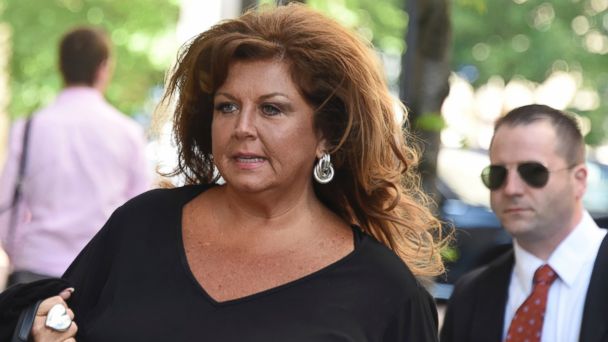
If the Jones case illustrates the limits of what bankruptcy can discharge, the Abby Lee Miller case illustrates the consequences of attempting to abuse the bankruptcy process itself. Miller, the choreographer and star of the reality television series Dance Moms, filed for Chapter 11 bankruptcy in 2010. The filing appeared routine — a small business owner seeking to reorganize debts.
Federal investigators later discovered that Miller had concealed approximately $755,000 in income earned during the bankruptcy proceedings, primarily from the television show and international dance events. She had structured cash payments to avoid detection, a practice that constituted both bankruptcy fraud and currency structuring violations under federal law.
In May 2017, Miller was sentenced to one year and one day in federal prison, plus two years of supervised release and a $40,000 fine. The DOJ's press release noted that she had "abused the bankruptcy system by hiding hundreds of thousands of dollars in income from the bankruptcy court." [^1]
The Miller case carries a practical lesson that bankruptcy attorneys routinely communicate to clients: bankruptcy courts are federal courts with significant investigative authority. The U.S. Trustee Program, which oversees bankruptcy proceedings on behalf of the Department of Justice, has broad powers to examine financial records, depose debtors, and refer cases for criminal prosecution. The automatic stay and the discharge process are powerful tools — but they come with a corresponding obligation of complete financial transparency.
The Tax Problem: Why the IRS Is the Most Dangerous Creditor
The single most common cause of celebrity financial distress — accounting for approximately 35% of high-profile cases — is unpaid federal and state income tax. The structural reason is straightforward: entertainers, athletes, and other high-income individuals often receive income in large, irregular payments rather than steady salaries. Without disciplined tax planning and withholding, the gap between earned income and tax liability can grow to catastrophic proportions.
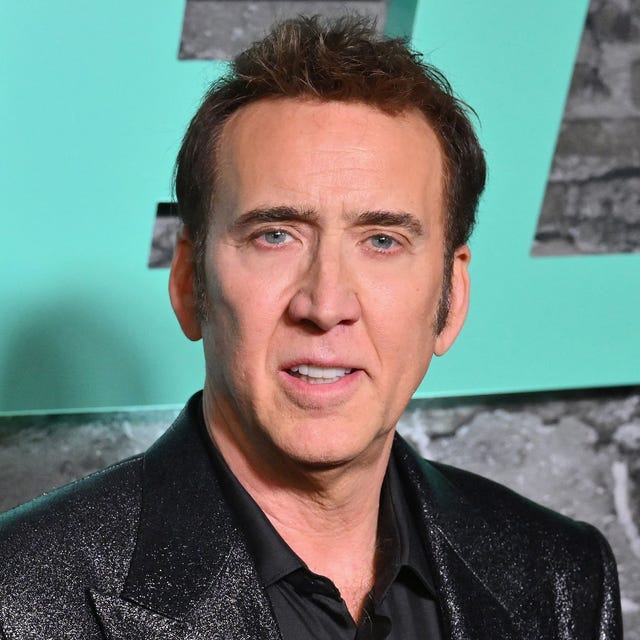
Nicolas Cage, who earned an estimated $150 million between 2002 and 2012, reportedly owed the IRS $14 million in back taxes by 2009 and was forced to sell multiple properties to satisfy the debt. Lil' Kim filed for Chapter 13 bankruptcy in 2018 with over $4 million in debts, including significant tax liabilities, in an attempt to save her $2.3 million New Jersey mansion from foreclosure.

The IRS's status as a priority creditor in bankruptcy proceedings means that tax debts must be paid before most other unsecured creditors. In a Chapter 13 plan, priority tax claims must be paid in full over the life of the plan. In a Chapter 7 liquidation, tax debts that do not meet the discharge conditions survive the proceeding and remain enforceable against the debtor.
For high-income individuals, the most effective strategy is prevention: quarterly estimated tax payments, disciplined withholding on entertainment income, and proactive engagement with tax counsel when income spikes. The alternative — allowing tax liability to accumulate while maintaining a high-spending lifestyle — is the most reliable path to the scenario that bankruptcy courts see repeatedly.
What These Cases Teach Us About Wealth and Financial Literacy
The data-driven taxonomy of celebrity bankruptcies points toward a set of structural vulnerabilities that are not unique to the famous. The same patterns — tax liability, legal judgment risk, lifestyle inflation, and investment failure — appear in personal bankruptcy filings across all income levels. What makes the celebrity cases instructive is their scale and visibility: they make legible, in public court documents, the financial mechanics that typically unfold in private.
Several practical principles emerge from a systematic review of these cases. First, income is not wealth. The ability to earn large sums does not automatically translate into financial security; it requires deliberate accumulation, tax management, and protection of assets. Second, legal liability is a financial risk that requires the same kind of proactive management as investment risk. The individuals who fared best in bankruptcy proceedings — like 50 Cent — were those who treated the process as a financial tool rather than a last resort. Third, the bankruptcy system is not a consequence-free escape hatch. The non-dischargeability provisions, the fraud exposure, and the reputational costs are real constraints that shape the calculus of every filing.
For individuals facing serious financial distress — at any income level — the most important step is early consultation with a qualified bankruptcy attorney. The options available at the beginning of a financial crisis are almost always better than those available at the end. The celebrity cases, for all their drama, are ultimately a reminder that the same legal system is available to anyone who needs it — and that understanding how it works is itself a form of financial literacy.
If you are facing personal financial distress, the attorneys listed in our directory can help you understand your options. Find a bankruptcy attorney in your state or learn more about how the process works.
For related data journalism, see our analysis of how private equity debt fueled the retail apocalypse, the FTX crypto collapse by the numbers, and the legal limits of bankruptcy discharge in the Purdue Pharma case.
References
[^1]: U.S. Department of Justice, Western District of Pennsylvania. "Dance Moms Star Abby Lee Miller Sentenced to Prison." May 9, 2017. https://www.justice.gov/usao-wdpa/pr/dance-moms-star-abby-lee-miller-sentenced-prison
[^2]: 11 U.S.C. § 523 — Exceptions to Discharge. Cornell Law School Legal Information Institute. https://www.law.cornell.edu/uscode/text/11/523
[^3]: U.S. Courts, Administrative Office. Bankruptcy Filings Statistics, 2018–2025. https://www.uscourts.gov/data-news/reports/statistical-reports/bankruptcy-filings-statistics
[^4]: American Bankruptcy Institute. Bankruptcy Statistics. https://www.abi.org/newsroom/bankruptcy-statistics
[^5]: Epiq Global / ABI. "Bankruptcy Filings Rise 11% in 2025." January 2026.
[^6]: Private Equity Stakeholder Project. "Private Equity Bankruptcy Tracker." February 2026. https://pestakeholder.org/reports/private-equity-bankruptcy-tracker/
Beyond the Headlines: Deeper Dives into Celebrity Financial Woes
While the initial shock of a celebrity bankruptcy filing often grabs headlines, the underlying reasons and long-term implications are far more complex. Our analysis goes beyond mere statistics, delving into the common pitfalls and unique challenges faced by high-profile individuals when their financial empires crumble. Understanding these patterns can offer valuable insights, not just for those in the public eye, but for anyone navigating financial difficulties.
Common Causes of Celebrity Bankruptcy
What drives someone with seemingly endless resources to file for bankruptcy? Several recurring themes emerge when examining celebrity financial failures:
- Extravagant Lifestyles: Maintaining a lavish lifestyle, often fueled by fluctuating income, can quickly deplete even substantial fortunes. High spending on luxury items, multiple properties, and large entourages often outpaces earnings.
- Poor Financial Management: Many celebrities delegate their finances to managers or advisors, but a lack of personal oversight or engagement can lead to mismanagement, fraud, or simply unsustainable investment strategies.
- Bad Investments: High-risk ventures, failed businesses, or speculative investments can wipe out millions. The allure of quick returns or a desire to diversify often leads to poor choices.
- Divorce and Legal Battles: Costly divorces, child support, and other legal disputes can drain assets and create significant debt. High-profile cases are often prolonged and expensive.
- Tax Issues: Neglecting tax obligations, failing to properly account for income, or falling prey to aggressive tax shelters can result in massive tax liens and penalties from the IRS.
- Medical Expenses: While less common for celebrities with access to top-tier healthcare, unexpected or prolonged medical issues can still contribute to financial strain, especially if insurance coverage is inadequate or if income streams are interrupted.
The Role of Bankruptcy in Celebrity Financial Recovery
For many, bankruptcy provides a necessary reset. Chapter 7 or Chapter 11 filings can offer a path to discharge overwhelming debts, reorganize finances, and in some cases, protect future earnings. It's not always the end of a career, but often a difficult, public step towards regaining control.
For more detailed information on the types of bankruptcy and how they work, visit our Bankruptcy Basics section. If you're struggling with debt, finding the right legal counsel is crucial. Explore our directory to find a bankruptcy lawyer near you who can guide you through your options.
Updated Statistics and Notable Cases
Our ongoing research continues to uncover new cases and evolving trends in celebrity financial distress. While the core reasons remain consistent, the economic landscape and legal precedents continually shape these outcomes. Stay tuned for further updates on how famous individuals navigate the complex world of personal finance and legal recourse.